Basement Flooding Cleanup in Eagan, MN
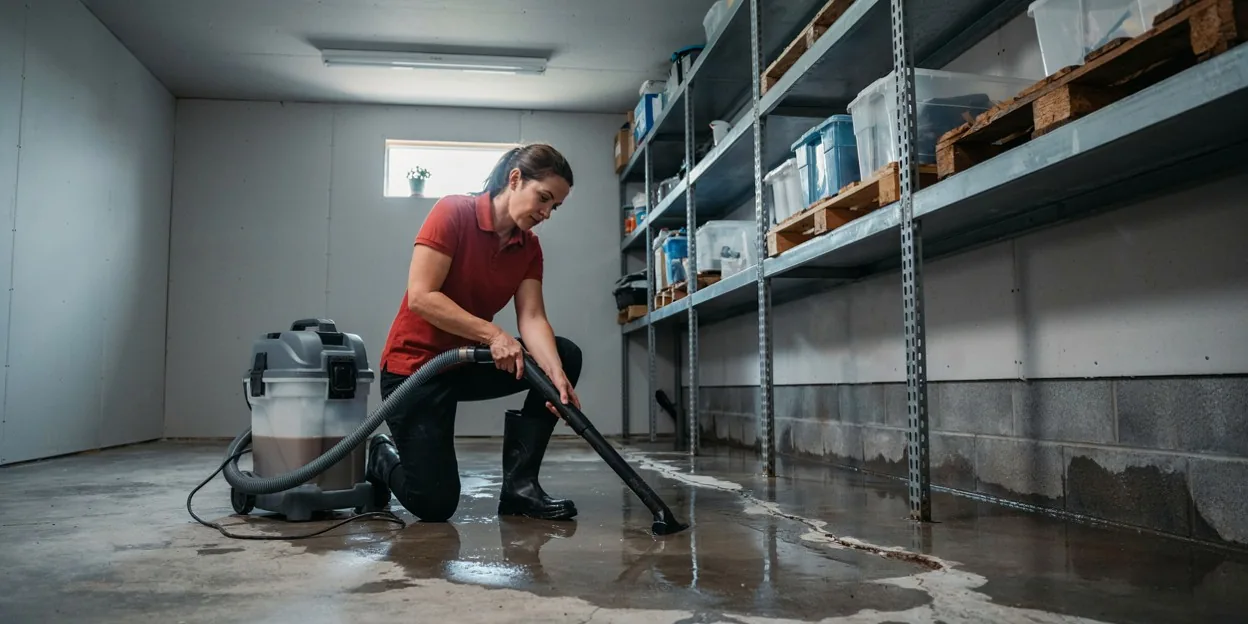
You came down the stairs to let the dog out and stopped on the last step. The carpet in the family room is dark from the walkout door to the furnace room, the bottom of the sectional is wet, and the storage boxes along the back wall are sitting in water you can see. This site puts you through by phone to an independent local provider who cleans up flooded lower levels in Eagan and across Dakota County.
The first hour: water off the concrete, pad out from under the carpet
The crew starts by finding out where the water came from, because that changes the job. Groundwater at the walkout wall, a sump pit that overflowed, and a burst line upstairs all leave the same puddle, but the fix and the drying plan differ. Then they pump the standing water off the floor and pull back the carpet to get at the pad, which holds more water than the carpet ever will.
Next they meter every wall on the level at the base, not just the wet-looking ones. Water on a concrete floor runs along the footing and wicks up into drywall on the far side of the room, behind the built-ins, and inside the closet under the stairs. The readings decide which drywall comes off at two feet and which stays.
Before the crew gets to the house
Shut off the breaker for the lower level if you can get to the panel dry. Get the boxes, the rugs, and the furniture legs up off the floor or onto a dry level. Prop the utility room door open so air moves. Photograph each wall, the water line on the boxes, and anything you plan to throw out. If the water came in through the sump pit, leave the pump alone unless it is under water. If it came from a pipe, close the main shutoff by the meter.
What stays, what goes, and how the crew decides
Carpet that got clean water often dries once the pad is gone. Pad almost always goes. Drywall that metered wet at the base is usually cut to two feet and the insulation behind it removed, because fiberglass in a wet wall holds water against the studs. Paneling from the 1970s is a judgment call, and the crew makes it with the meter. Concrete and framing dry in place under air movers and dehumidifiers. Once the wet material is out, structural drying carries the job through to dry readings.
Why the lower levels in Eagan flood the way they do
Most Eagan houses are split-levels and walkouts built from the mid 1970s through the 1990s, set into glacial hills with the lower level partly below grade. Each has a footing drain that feeds a sump pit, and the pit is the weak point. When a summer thunderstorm sits over the south metro, the ponds fill, the water table rises, and a pump that runs fine in a normal week cannot keep up or loses power. When the frost goes out in April, the same walkout wall that stayed dry all winter weeps for a month.
A basement with a dead pump is a sump pump failure cleanup job first, because drying a room that is still taking water is wasted effort. A basement that floods from a washer hose or a water heater on the same level is a clean-water job that moves faster. Say which one you have when you call.
Policies read this loss differently depending on the source. Sudden pipe failures are often covered. Seepage and water that rises through a drain or pit are often excluded unless you carry a water backup endorsement. Nobody on this site can say what your policy does. Have the crew log the readings, the photos, and the discovery date so your adjuster gets the timeline in writing.
Calling about a flooded lower level
Have the address handy and say whether the water is still coming in, whether the sump pump is running, and whether the level is finished. Mention if the water came up through a drain or smells like sewage, because that changes what the crew brings. Call (651) 433-7589.