Water Extraction in Eagan, MN
The supply line to the upstairs toilet let go while you were at work in Bloomington, and it ran for nine hours. The bathroom floor is under an inch of water, the hallway carpet is soaked to the stairs, and it is dripping through the kitchen ceiling on the level below. This site puts you through to an independent local provider who extracts water from houses in Eagan and across Dakota County.
Pulling the bulk water before it moves any farther
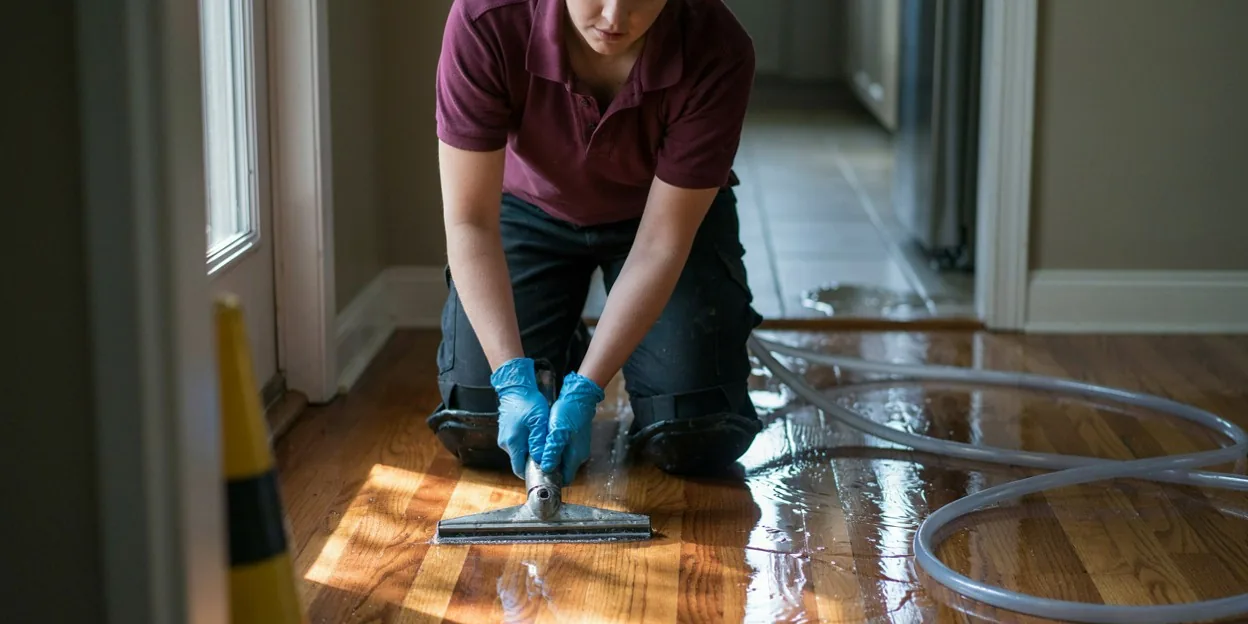
Extraction is the part of the job that has to happen fast, because every hour the water sits it soaks deeper into pad, subfloor, and the bottom of the walls. The crew brings a truck-mounted or portable extractor and pulls the standing water off tile, carpet, and concrete. On carpet they use a weighted extraction tool that squeezes the pad through the carpet, which removes far more than a shop vac ever will.
Then they take the first meter readings on every surface the water could have reached: the subfloor under the hallway, the drywall at the base of each wall, the ceiling below, and the cabinet toe kicks in the kitchen. Those readings are the map for the drying that follows.
The hour before the crew arrives
Close the main shutoff by the meter if the water came from a pipe. Kill the breaker for any room where water is at the outlets. Pull up rugs, get furniture legs onto foil or blocks, and move anything cardboard to a dry level. Open cabinet doors under sinks. Photograph each room before you move anything, then again after. Do not run the furnace fan to dry things if water reached the ductwork on a lower level; say so when you call.
What comes back and what comes out
Clean water from a supply line is the easiest case. Carpet often dries once the pad is out. Subfloor and framing usually dry in place. Drywall that metered wet at the base is cut, and the insulation behind it removed, because it will not dry inside the wall. Laminate flooring almost always comes out; the core swells and does not go back. A ceiling that took water from above is opened at the low spot so the cavity can dry and so it does not come down on its own. Once the bulk water is gone, structural drying is the rest of the job.
Water from a toilet backup or a floor drain is a different category, and the crew treats it that way. Carpet and pad it touched are removed rather than dried. Say where the water came from when you call so the provider arrives ready.
Eagan houses and the way water moves through them
Most homes here went up between the mid 1970s and the late 1990s as split-levels, split-entries, and two-story walkouts. A leak on the upper level of a split-entry lands on the lower level fast, because the two levels share a short stair and an open landing. A walkout puts the laundry, the water heater, and the family room all on the same concrete slab, so water from any one of them crosses the whole level under the carpet.
Winter adds its own failures. A pipe that froze in a rim joist during a stretch below zero leaks when the house warms up, and by then the wall has been wet for a day. That is a frozen pipe cleanup with extraction as the first step. A dead sump pump in a July thunderstorm is a sump pump failure cleanup, and the extraction there starts with the pit.
A sudden pipe failure is often covered under a homeowner policy; a slow leak under a sink for months usually is not. This site cannot read your policy and makes no promise about it. Have the crew log the readings and photos from the first visit, because those numbers are what the adjuster works from.
When you call about water on the floor
Say which level is wet, where the water came from, and whether it has stopped. Mention if it is dripping through a ceiling or has reached a lower level. Have the address and a callback number handy. Call (651) 433-7589.